


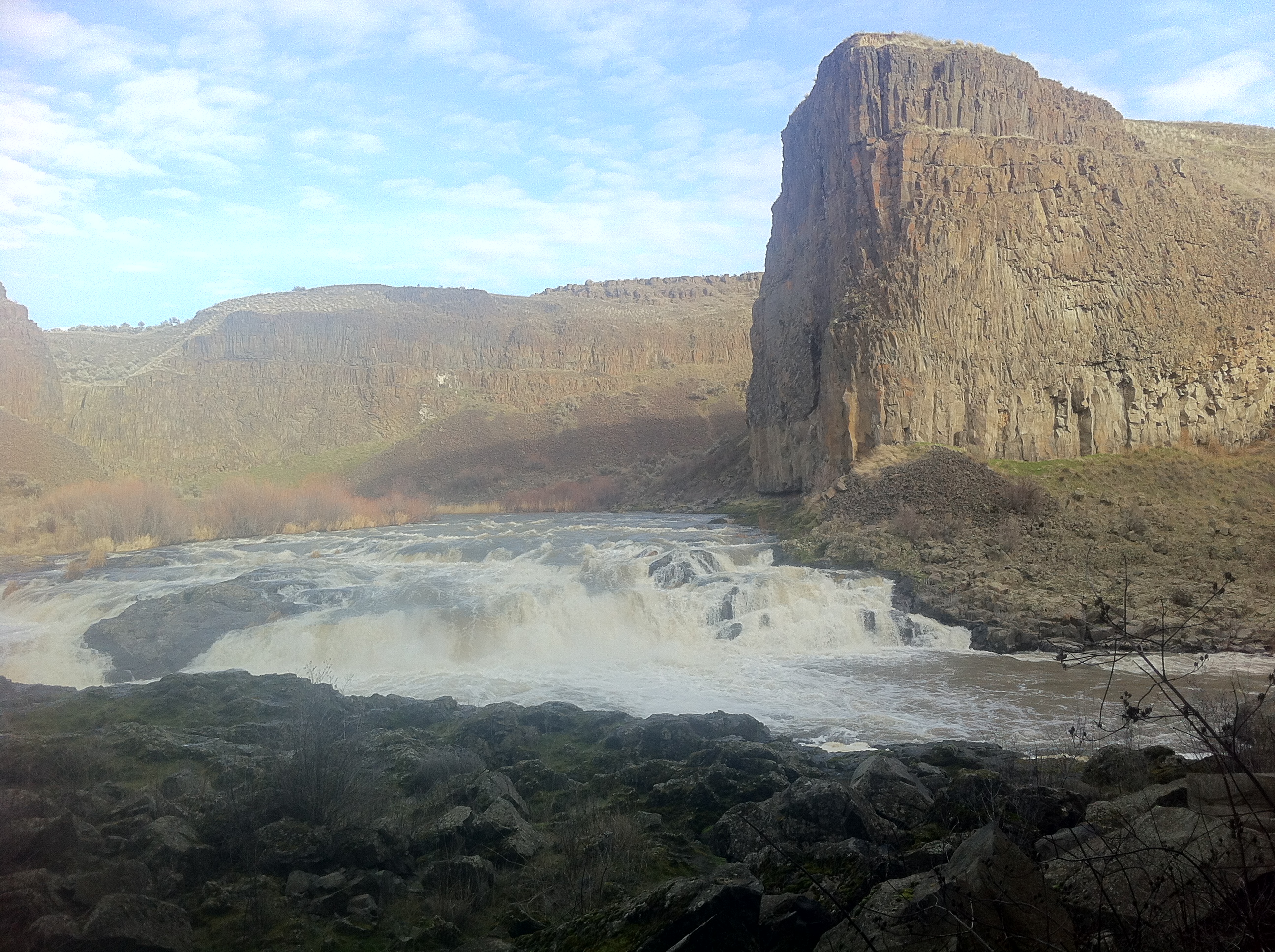
Visit to Palouse Falls
You drive through an hour of nothing to get here. Wheat fields and sky, wheat fields and sky, and then the ground just drops out from under everything. The canyon appears without warning — one minute you’re on flat farmland and the next you’re looking down into something ancient and violent.
The falls drop about 200 feet into a basalt amphitheater carved out during the Ice Age floods. The same floods that ripped across the Columbia Plateau and scoured everything down to bedrock fifteen thousand years ago. Standing at the rim you can see the layered basalt columns where the water cut through millions of years of lava flows in a matter of days. Geology doesn’t usually make you feel small but this place does it.
I got there in the late afternoon when the sun was hitting the mist at the base of the falls. There was a rainbow in the spray that kept appearing and disappearing as the wind shifted. A few other people at the overlook, everyone quiet, everyone just watching. There’s not much to say when you’re looking at something like that.
The Palouse River above the falls is modest — you’d never guess it was about to go over a cliff. Below the falls it’s a different river entirely, churning and loud, working its way through the canyon toward the Snake. Washington made it the state waterfall a few years back. Hard to argue with the choice.